One area of the space economy that doesn’t get much attention yet, but keeps quietly attracting government and private capital, is space-based solar power (SBSP)
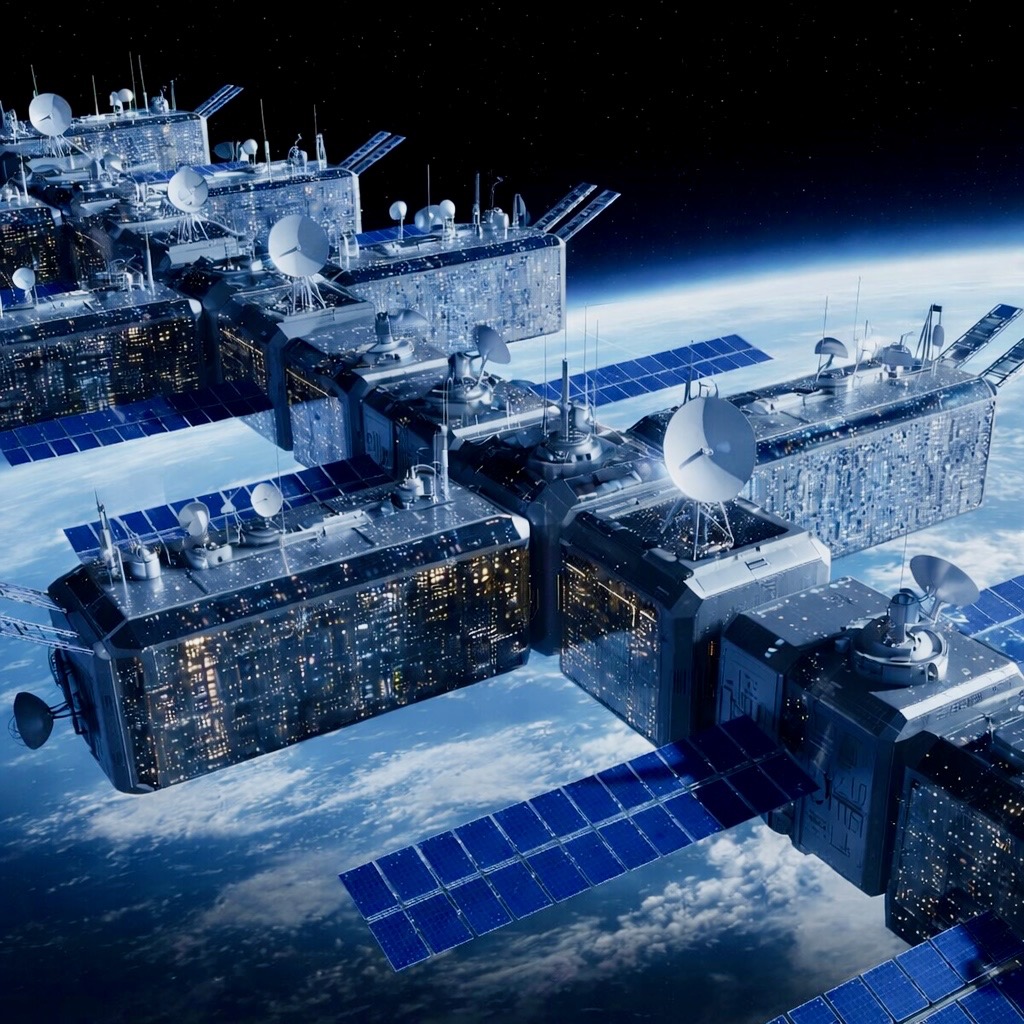
One area of the space economy that doesn’t get much attention yet, but keeps quietly attracting government and private capital, is space-based solar power (SBSP). The basic idea is simple: collect solar energy in orbit (where sunlight is constant), then transmit that energy to Earth or use it to power orbital infrastructure.
SBSP is still early, but what’s changed recently is credibility. Multiple agencies and companies are moving beyond theory into real demonstrations. As that happens, the bottleneck won’t be “can we collect sunlight,” but whether these systems can safely manage, store, and distribute large amounts of power in space over long durations.
In a widely shared post on X, Elon Musk outlined a future in which large constellations of solar-powered satellites provide continuous energy for advanced computing and space systems, noting that the growing energy demands of AI and human expansion “cannot stay on Earth” (https://x.com/elonmusk/status/1985279182004420929?utm).
This where companies like KULR start to look interesting.
KULR isn’t an SBSP developer, and that’s actually the point. Their value is as an enabler. Any serious SBSP platform—or energy-intensive orbital infrastructure tied to it—will require ultra-reliable battery systems, thermal management, and safety solutions that can survive extreme space environments. Those are precisely the areas where KULR has existing flight heritage.
Another angle investors may be missing: moving energy-intensive infrastructure into orbit doesn’t just support clean energy concepts on Earth, it also enables entirely new industrial capabilities in space. Think orbital manufacturing, data processing, communications, and defense applications that don’t make sense without persistent, high-density power availability.
KULR’s advantage isn’t hype or blue-sky tech. It’s that they already operate at the intersection of energy storage, thermal control, and space qualification. If SBSP actually makes the jump from experiments to real deployments, the steady money will likely flow to the enabling tech, not the flashy solar arrays that get the headlines.
This isn’t a near-term catalyst story. It’s optionality. As global investment in SBSP and space infrastructure grows, companies with proven space systems and power-management expertise should see their strategic value increase. KULR looks positioned to be one of those beneficiaries if the thesis plays out.
Not investment advice — just an area worth watching as space energy moves from concept toward reality.
You might like this article:FDA Flags Novo Nordisk’s Wegovy Pill Ad for Misleading Claims