Wall Street cheers Rivian’s clean-sheet approach to self-driving, custom chips, and a clear roadmap toward personal Level 4 autonomy
Rivian (RIVN) shares surged more than 15% on Friday, buoyed by strong investor reaction following the company’s Autonomy & AI Day, where CEO RJ Scaringe outlined a bold and increasingly concrete roadmap toward advanced self-driving capabilities. The rally reflected renewed confidence that Rivian’s heavy investments in artificial intelligence, software, and custom hardware may soon translate into meaningful competitive differentiation.
At the center of the announcement was Rivian’s new Autonomy platform and its Large Driving Model (LDM), an AI system trained in a manner similar to large language models. This software foundation will enable Rivian to significantly expand its Universal Hands-Free (UHF) assisted driving feature to second-generation R1 vehicles. The system will initially operate across 3.5 million miles of mapped U.S. roads, signaling a major scale-up in real-world autonomous coverage.
Looking ahead, Rivian laid out a phased autonomy timeline. In 2026, the company plans to introduce a point-to-point hands-free driving system, followed by a hands-free and eyes-free solution. The ultimate objective is what Rivian calls “personal Level 4” autonomy—vehicles capable of fully autonomous driving without requiring driver attention in defined conditions.
Scaringe emphasized that this progress stems from a deliberate clean-sheet redesign of Rivian’s autonomy stack. Rather than iterating on legacy systems, the company rebuilt its perception, compute, and software architecture from the ground up around an AI-first philosophy. Vehicles already on the road serve as data collectors in a large feedback loop, continuously training and improving Rivian’s autonomous models.
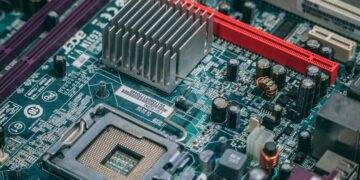
A critical piece of this strategy is Rivian’s move toward custom silicon. The newly announced Rivian Autonomy Processor (RAP1) will replace Nvidia’s Orin chip in future vehicles, giving Rivian tighter control over performance, cost, and iteration speed. This vertical integration resonated strongly with Wall Street.
Needham analyst Chris Pierce described the shift as Rivian evolving from a traditional automaker adopting autonomy to one leveraging AI to build end-to-end self-driving systems. He highlighted Rivian’s in-house silicon, compute architecture, and autonomy software as key differentiators from legacy OEMs still reliant on third-party suppliers. Pierce reiterated a Buy rating on the stock and raised his price target to $23 from $14, citing faster innovation cycles and long-term cost advantages.
The most significant payoff, Pierce noted, could arrive in 2027, when Rivian’s more affordable R2 model—expected to cost around $50,000—enters full production with point-to-point and “eyes-off” self-driving features. If Rivian delivers on this vision, Friday’s rally may prove to be just the beginning.
You might like this article:Oracle Shares Plunge Amid Surging AI Costs and Debt Concerns