Electric vehicle maker shows financial progress but warns losses will continue during next phase of expansion
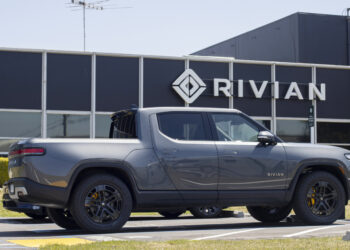
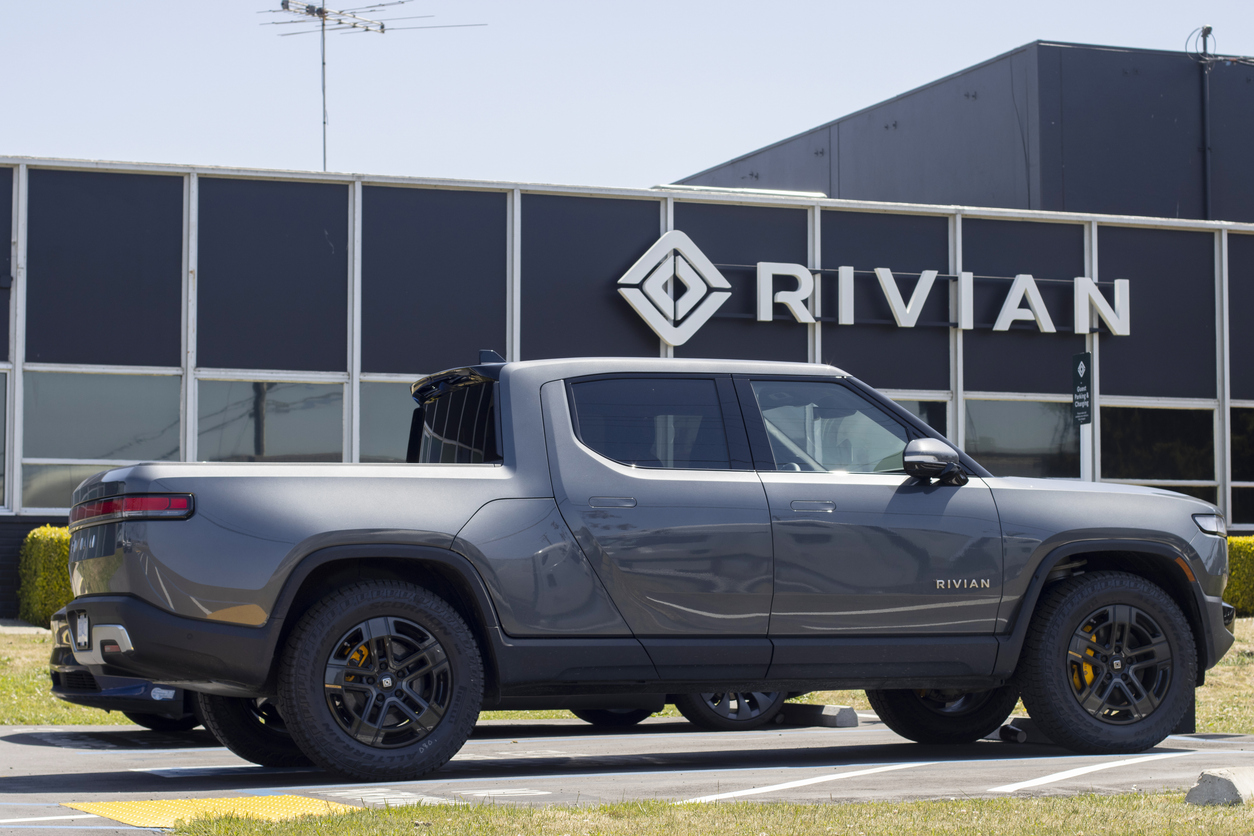
Rivian Automotive (RIVN) delivered stronger-than-expected fourth-quarter results and outlined ambitious growth plans for 2026, sending its shares sharply higher in after-hours trading. The electric vehicle manufacturer reported adjusted losses of 54 cents per share, outperforming Wall Street expectations of a 68-cent loss. Revenue also exceeded forecasts, reaching $1.29 billion compared with the anticipated $1.26 billion, highlighting improving operational momentum.
The company’s outlook for 2026 signals a significant acceleration in production and deliveries. Rivian expects to deliver between 62,000 and 67,000 vehicles this year, representing a 47% to 59% increase compared to 2025. This growth is expected to be driven primarily by the launch of the company’s next-generation R2 SUV, scheduled for release in the second quarter. The R2 is widely viewed by investors as a critical model that could expand Rivian’s customer base and move the company closer to long-term profitability.
Despite strong growth projections, Rivian cautioned that it will continue to incur substantial losses as it invests heavily in scaling production and launching new vehicles. The company expects adjusted pre-tax losses between $1.8 billion and $2.1 billion in 2026, alongside capital expenditures of up to $2.05 billion. These investments reflect Rivian’s strategic focus on future growth rather than near-term profitability.
Financially, Rivian showed signs of improvement. The company achieved a gross profit of $144 million in 2025, driven in part by its software and services joint venture with Volkswagen. Additionally, Rivian reduced its annual net loss to $3.6 billion, an improvement from $4.75 billion the previous year.
Importantly, Rivian maintains a strong liquidity position, ending the quarter with $6.59 billion in total liquidity, including $6.1 billion in cash and investments. This financial cushion provides the company with the flexibility to continue investing in its product pipeline.
As Rivian prepares for the launch of the R2, investors are increasingly focused on whether this next-generation vehicle can drive sustainable growth and ultimately transform the company into a profitable EV leader.
You might like this article:FanDuel and DraftKings Ban Credit Cards, Reshaping U.S. Sports Betting Payments