Company reports $7.4 million in quarterly revenue, exits Bitcoin holdings, and strengthens its balance sheet with $54.5 million in cash and no debt.
KULR Technology Group (KULR) reported strong third-quarter 2026 revenue growth, driven by accelerating demand for its battery energy storage solutions across aerospace, defense, robotics, and other mission-critical industries.
Revenue from continuing operations increased 197% year-over-year to $7.4 million, compared with $2.49 million in the prior-year period. Product sales surged 299% to approximately $6.5 million, accounting for 88% of total quarterly revenue.
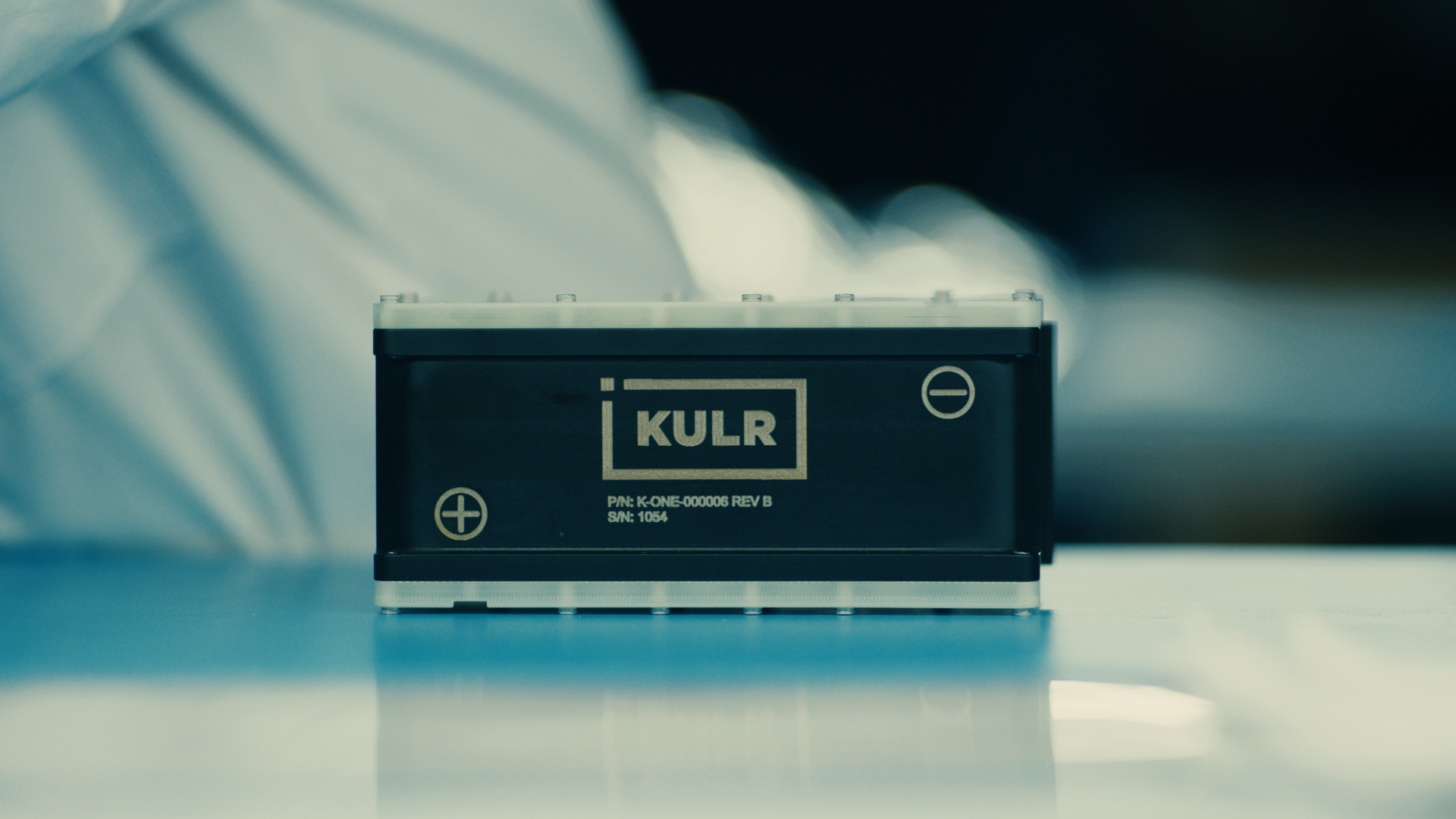
The growth was primarily supported by the company’s KULR ONE battery platform, including its KULR ONE Max energy storage systems designed for power-as-a-service deployments in Japan’s electricity market.
Despite the substantial revenue increase, profitability remained challenging. Gross margin declined to 4% from 17% a year earlier, reflecting higher production costs associated with new battery configurations and custom assembly programs.
Operating losses widened to $11 million from $8.74 million, largely due to increased research and development spending.
However, KULR reported GAAP net income of $4.47 million, or $0.10 per share, compared with a net loss of $6.97 million, or $0.17 per share, a year earlier.
The positive net income was primarily attributable to a $15.8 million non-recurring gain related to digital assets rather than operating profitability.
Stronger Balance Sheet and Strategic Expansion
KULR completed its exit from Bitcoin investments during the quarter, ending September with $54.5 million in cash, no outstanding debt, and no remaining digital assets.
The company also paused its at-the-market equity offering program through December 31, 2026.
Meanwhile, KULR continues developing an NDAA-compliant battery supply chain for autonomous systems, incorporating domestic manufacturing partnerships, proprietary battery management systems, and charging technologies ahead of an anticipated 2027 production expansion.
To improve operational efficiency, the company implemented workforce reductions in November expected to generate approximately $4 million in annualized savings.
Research and development expenses are also projected to decline beginning in the fourth quarter and continuing into 2027 as major development initiatives approach completion.
Looking ahead, KULR aims to capitalize on expanding demand for advanced battery technologies while improving margins, reducing operating expenses, and translating rapid product revenue growth into sustainable profitability.
Investors will closely monitor execution of the company’s cost-reduction strategy and its ability to scale production across emerging energy storage and autonomous technology markets.