CEO RJ Scaringe outlines the EV maker’s AI-driven roadmap toward personal Level 4 autonomy
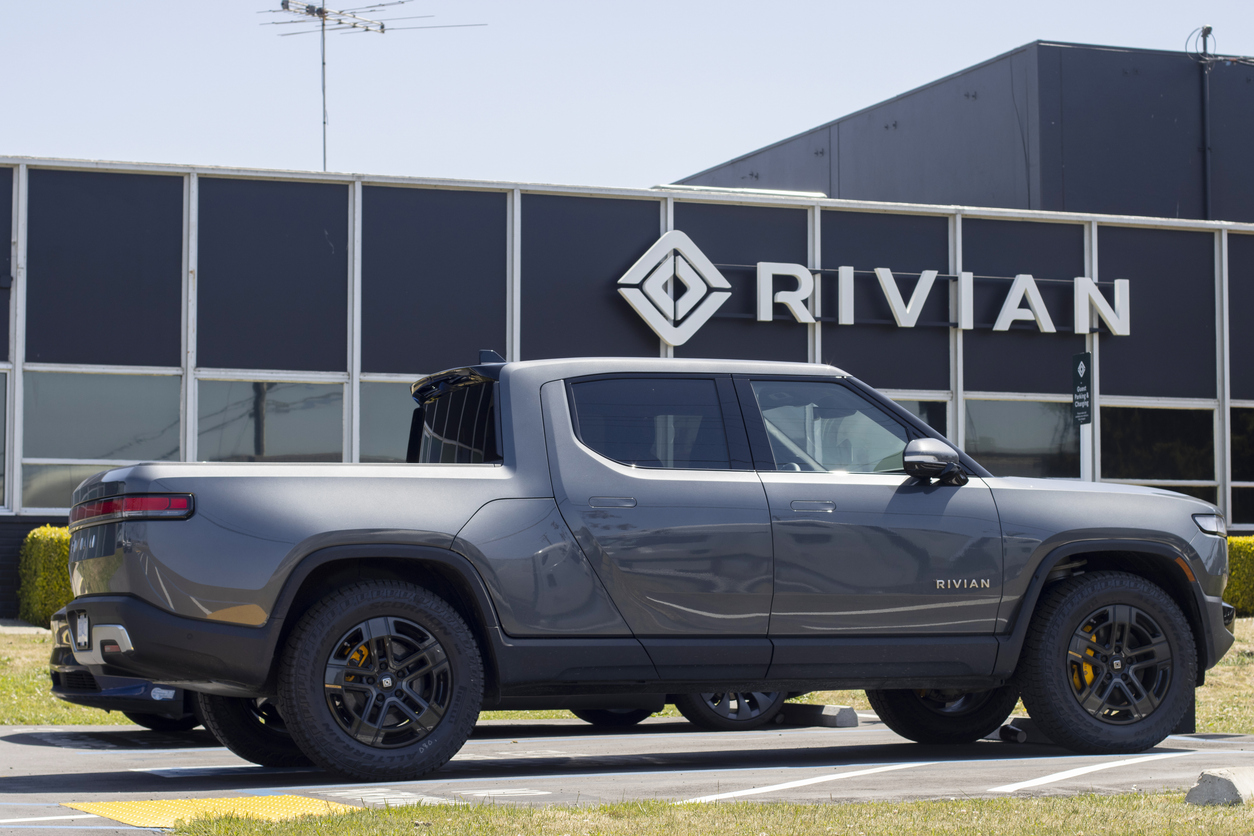
At Rivian’s (RIVN) Autonomy and AI Day on Dec. 11, CEO RJ Scaringe laid out an ambitious vision for the company’s future, centered on deep vertical integration and a long-term push toward fully autonomous driving. The event came at a challenging moment for the electric vehicle industry, where profitability has proven elusive for all but Tesla. While Rivian has achieved gross profits in recent quarters, net profitability remains a work in progress.
Scaringe introduced Rivian’s new Autonomy platform, describing it as the result of a “clean-sheet” redesign that began in early 2022. That effort led to the Gen 2 vehicles launched in mid-2024, which feature roughly 10 times more on-vehicle compute power than Rivian’s first-generation models. With 55 megapixels of cameras and an array of radars, the platform was designed to generate the massive data streams required to train advanced AI models.
The next leap comes with Rivian’s Gen 3 platform, built around an in-house designed chip capable of processing 5 billion pixels per second—about five times current best-in-class systems. Scaringe said custom silicon allows Rivian to optimize performance specifically for vision-based robotics while accelerating model training and efficiency. Manufacturing will be handled by a partner such as TSMC, combining in-house design control with industrial-scale production.
Rivian’s autonomy roadmap advances in stages. Today, the company offers Universal Hands-Free driving on select roads. In 2026, Rivian plans to introduce supervised, point-to-point hands-free driving. That will be followed by “eyes-off” capability, where drivers become true passengers, and ultimately “personal Level 4” autonomy—vehicles operating fully on their own, even without occupants.
Unlike Tesla’s camera-only approach, Rivian combines cameras with radar and lidar, turning its fleet into what Scaringe calls a “ground truth” system for training AI models. While acknowledging Tesla’s lead and technical achievements, Scaringe said Rivian’s goal is to be world-class and competitive at the highest level.
Zooming out, Scaringe argued that the pullback by many automakers from EV investment has left U.S. consumers with too few compelling choices, particularly under $50,000. With adoption still around 8%, he believes the market needs more strong competitors—positioning Rivian’s upcoming R2 as a key step toward broader electrification.
You might like this article:Hut 8 Secures $7 Billion Data Center Lease Backed by Google at River Bend Campus