EV maker balances production momentum, partnerships, and cash burn ahead of Q1 results
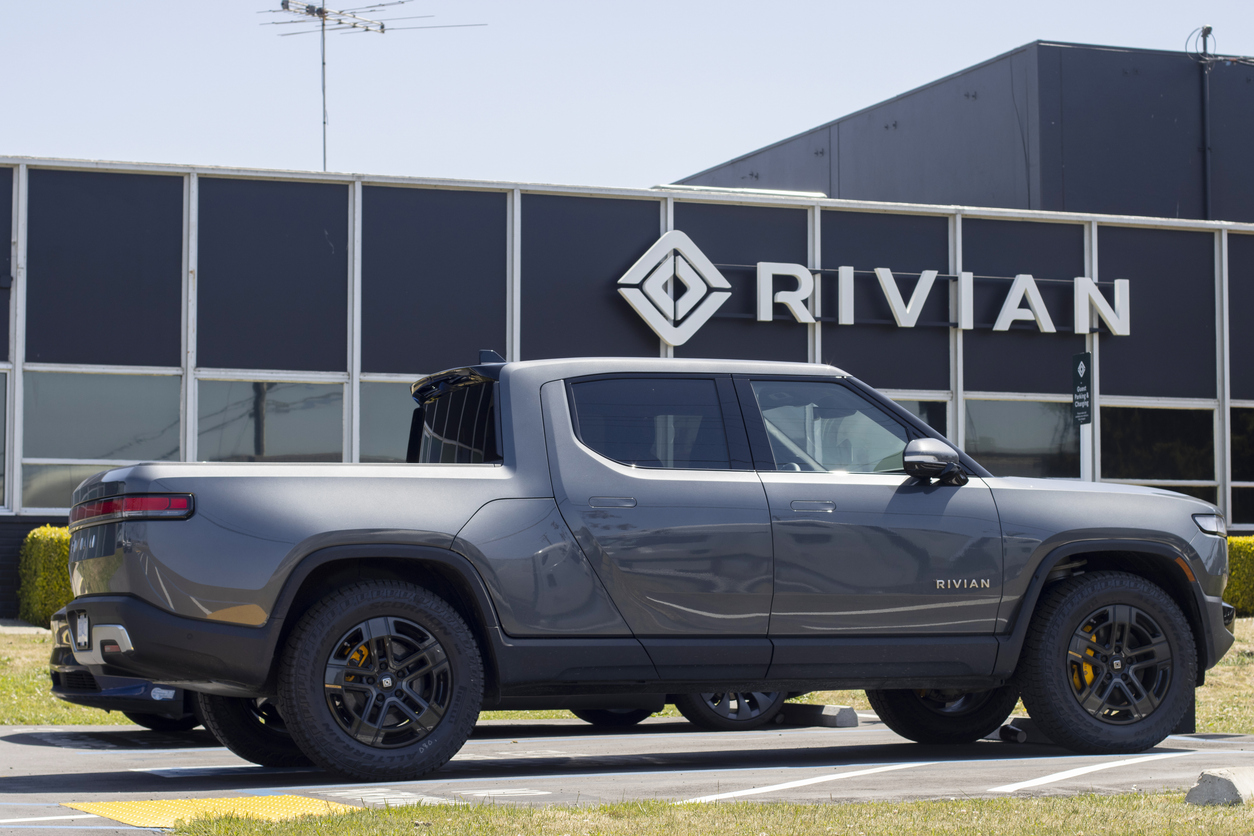
Rivian Automotive (RIVN) is set to report its first-quarter earnings after the bell on Thursday, with investors closely watching the company’s progress as it prepares to scale production of its highly anticipated R2 midsize SUV. The earnings report comes at a pivotal moment, as Rivian works to balance growth initiatives with ongoing financial challenges, including cash burn and profitability concerns.
Wall Street expects Rivian to report revenue of approximately $1.39 billion for the quarter, representing a 27% decline from the same period last year. The company is also projected to post an adjusted loss per share of $0.59 and an EBITDA loss nearing $500 million. These figures highlight the continued pressure on Rivian’s financials as it invests heavily in expanding its production capabilities and product lineup.
A major focus for investors will be the rollout of the R2, which recently entered production at the company’s facility in Normal, Illinois. Rivian has indicated that customer deliveries are expected to begin later this spring, marking a critical milestone for the company as it aims to broaden its appeal beyond its current lineup of higher-priced vehicles.
Despite financial headwinds, Rivian has demonstrated operational progress. The company produced over 10,000 vehicles in the first quarter and reaffirmed its full-year delivery guidance of 62,000 to 67,000 units. Additionally, strategic partnerships are playing an increasingly important role in Rivian’s growth strategy. Collaborations with Volkswagen and Uber are expected to support long-term expansion, particularly in software development and autonomous vehicle deployment.
Liquidity remains another key area of focus. Rivian recently secured an additional $1 billion investment from Volkswagen, helping to strengthen its cash position as it navigates high capital expenditures.
As Rivian prepares to release its earnings, the company’s ability to execute on the R2 launch while managing costs and scaling production will be critical in shaping investor sentiment and its path toward sustainable growth.
You might like this article:Semiconductor Stocks Rally as AI Spending Fuels Chip Demand